
Phil Hale


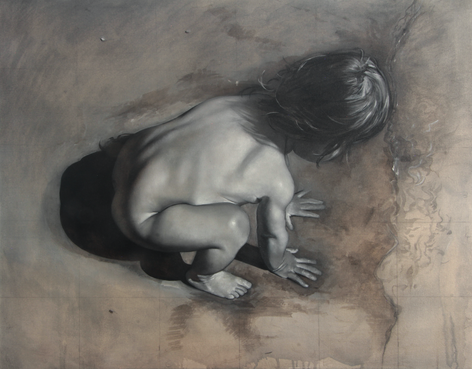

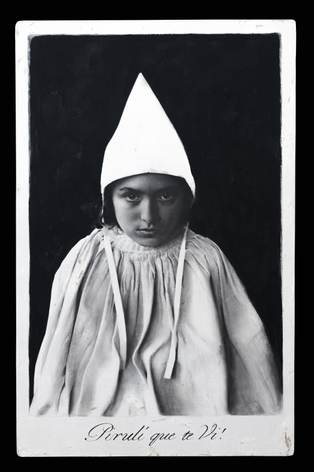
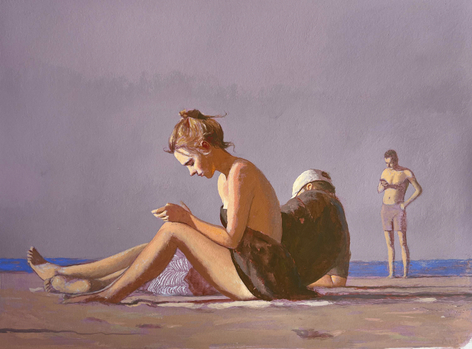

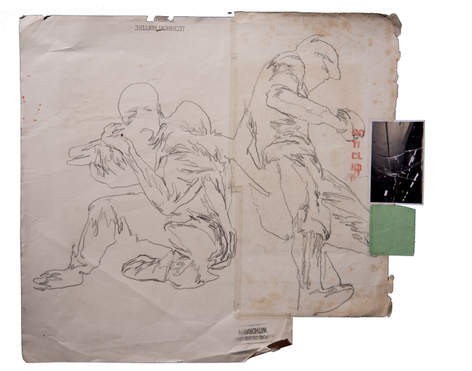


Anita Rogers Gallery is pleased to present THE DRAWING SHOW, on view March 11- April 18, 2026 at 494 Greenwich Street in New York. Tomas Watson joins us in curating this special exhibition that features works by Bo Bartlett, Noah Buchanan, Michael Grimaldi, Amaya Gurpide, Phil Hale, Jordan Sokol & Tomas Watson. The gallery will host an opening reception on Wednesday, March 11, 6-8pm. Please RSVP to Info@AnitaRogersGallery.com to attend.
In the mid 90s, the French novelist/historian Olivier Delorme remarked to me, "Drawing is to painting what grammar is to writing." At the time, I agreed with him, but over the years, I have found drawing to be so much more than that, to the extent that it defies a straightforward description.
Many people (myself included) will often gauge an artist’s merits based on the qualities found in their drawings. But what exactly are these qualities and how can we define what drawing is?
A traditional definition of drawing might be that it had a function, that it was the preparatory work, or study, for a large, commissioned painting. These drawings would be made from life, and by necessity and practicality, needed to be portable, lightweight and to contain the requisite information for later use.
This preparatory, functional role tends to dominate a general consensus of what drawing is, focusing on the very limited idea that the picture will be small, paper-based, monochromatic, and made using pencil, charcoal or ink. It is also responsible for delegating drawing to a lesser position than painting. I would argue that on the contrary, the preparatory drawings/sketches/studies, exhibit more life, vigor and honesty than the finished paintings they were made for. The exquisite studies for the Sistine Chapel by Michelangelo are a case in point.
Not every drawing is made to serve a greater purpose; far from it, most exist in their own right, can be of any scale, heavily worked, full of color and created on any surface.
A good drawing will convincingly portray form in space, with the weight and structure of the object, tangible beneath the surface. A good drawing should also exhibit a satisfying harmony of tonal values in its use of light and shade, the composition and overall design should be well-balanced, interestingly handled and pleasing to the eye. It is seldom about the depicted surfaces and the illusionistic tricks of the hyperrealists (although there is often some crossover), and it should not be overtly painterly, as that would detract from the intentions of the drawing itself.
Other considerations might be the fluidity and elegance of the line, the interplay of the mark-making with the surface textures of the substrate, and the overall 'presence' of the piece.
In terms of the materials employed or surfaces used there has never been any restriction. Turner, for example, in his countless sketchbooks, used pencil, ink-washes, watercolor, tempera, and chalk. Degas, in his studies, often used essence (oil paint with excess oil removed) on paper, diluted with turpentine. Leonardo Da Vinci used silverpoint (precursor to the pencil), on a ground prepared from bone ash, zinc oxide and rabbit skin glue. Before paper, papyrus was used, and going back even further, the first drawings were made using soot bound with animal fat and daubed on the rock wall.
Drawing is the first (and often, final) physical action taken from an idea or concept, transforming an internal notion into a tangible form. It was never about the materials or methods; rather, drawing is the most efficient way of presenting an idea.
This exhibition, which I had the honor and privilege to curate and be a part of, involves some of the best figurative artists alive, whose drawings are a major component of their practice and define their work. In these uncertain times, it heralds the importance of fundamental core values and a return to the building blocks of art.
-Tomas Watson
Since the gallery opened nearly ten years ago, drawing and works on paper have played a crucial role in our identity and program. Last year, Watson approached us with the concept for THE DRAWING SHOW, and it seemed like a natural fit. The exhibition reinforces the gallery’s belief that drawing is essential and fundamental, a place where work is pared down to basics and the artist’s hand can shine. In many ways, the exhibition encapsulates ideas that have shaped the gallery from the beginning, and it feels especially fitting that the exhibition will be on view during the gallery’s ten-year anniversary this April. We are honored to present the work of the seven participating artists and extend our sincere gratitude for their involvement: Bo Bartlett, Noah Buchanan, Michael Grimaldi, Amaya Gurpide, Phil Hale, Jordan Sokol, and Tomas Watson.
The gallery will publish a catalog in conjunction with the exhibition. It will be available for sale online and in the gallery during the exhibition.
For further information and photographs, please contact Elizabeth Thompson at elizabeth.thompson@anitarogersgallery.com, or call 347.604.2346. The gallery is open Tuesday through Saturday 10am – 6pm.
